The Spaces We Try to Recreate (And Why They Never Feel the Same)
There are certain films that don’t just leave an impression — they linger in your psyche, quietly waiting for you to catch up.
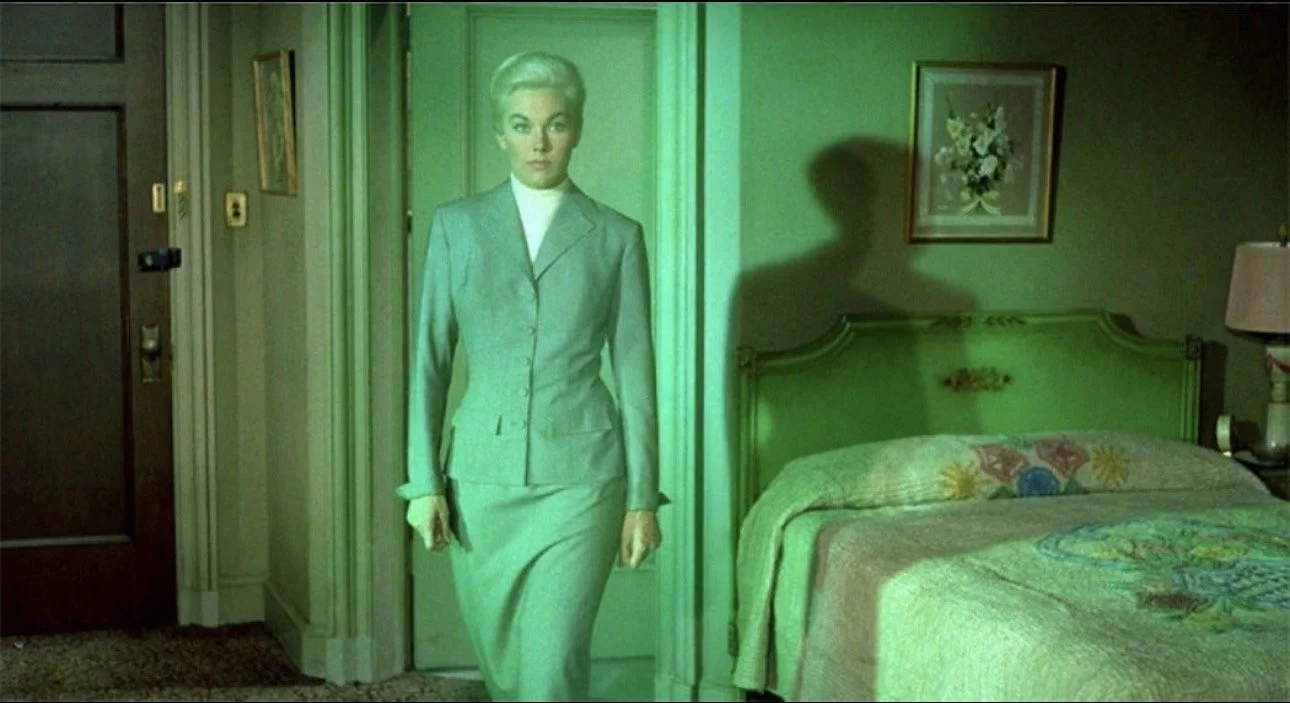
Still from Vertigo (1958), directed by Alfred Hitchcock. © Paramount Pictures.
For me, that film has always been Vertigo.
I first watched it as a teenager. I remember how strange it felt — beautiful, unsettling, slightly disorienting. I didn’t fully understand it, but I knew it was saying something important. Something about loss. About longing. About the way we try to hold onto something that’s already gone.
Years later, I understood it differently.
Not as a story — but as a pattern.
The desire to recreate something that no longer exists
What struck me most wasn’t the romance.
It was the psychology.
Scottie doesn’t fall in love with Judy for who she is. He tries to transform her into Madeleine — not because he loves her, but because he cannot accept the loss of what he had.
It’s grief disguised as love.
It’s control masquerading as affection.
And Judy, heartbreakingly, agrees to become the illusion — just to be loved.
It’s uncomfortable. It’s confronting.
And it’s also deeply human.
I see this same instinct play out in design more often than people realise.
Clients don’t just come to a project wanting a new kitchen or a better layout.
More often than not, they’re trying to recreate a feeling.
A home they once lived in.
A space that felt easier.
A version of life that felt more settled, more certain, more complete.
They bring references, images, ideas — but underneath all of it is something harder to define:
“I want it to feel like it did before.”
But spaces, like relationships, don’t work that way.
You can’t rebuild something from memory and expect it to feel the same.
Because it wasn’t just the space.
It was the moment.
The context.
Who you were at that time.
This is where design shifts from selection to understanding.
Good design isn’t about recreating what was.
It’s about identifying what actually mattered — and translating that into something that works now.
Not a replica.
Not an illusion.
But a considered response to how you live today.
Because sometimes, what we’re really trying to rebuild…
was never just the room.
And the work — in design, and in life —
is learning to recognise the difference.
⸻
If you’re planning a renovation and want clarity around what you’re actually trying to achieve — before committing to plans, materials, or a builder — that’s exactly where I come in.
Cloud23 Design works with homeowners to define the vision, resolve the layout, and prepare clear, builder-ready documentation so decisions are made with confidence from the outset.